Thursday, January 14, 2010

Paris, Texas (1984)


‘Paris, Texas’ is a stunning yet sublime portrait of the human spirit’s quest for redemption and belonging, an extraordinary film which displays a remarkable understanding of its characters and of the vast, lonely world they inhabit. Through beautifully photographed images and flawlessly executed movements and dialogue, the film manages to elicit complex and profound emotions while still managing to maintain a genuine and personal perspective of reality. Rarely are films successful in presenting a world so rich with such authentic humanity, but ‘Paris, Texas’ is unique in its ability to transcend the artistic boundaries of dramatic film-making, and will slowly but surely integrate itself into the lives of those who accept it for the quiet masterpiece it truly is.


The severely underrated Harry Dean Stanton stars as Travis Stockwell, a lonely drifter who wanders aimlessly through a spacious and empty desert somewhere in the American Midwest, endlessly searching for something profoundly important, yet he can’t quite remember what that something is. Travis is eventually discovered by his successful brother Walt, who is shocked that Travis is still alive. Walt explains to the dirty and mute Travis that he had completely disappeared for four long years, during which time he and his wife had been raising Travis’ eight year old son Hunter for him. After Travis lays eyes upon Hunter for the first time in four years, memories of love and loss flood back into his conscious, and he soon embarks on a journey to rejuvenate his long disbanded family.


What proceeds is a tale of reunion and rediscovery, where cherished memories of love and loyalty are finally restored and the emotional bonds tattered by years of loneliness and alienation are once again restored. One of the more remarkable aspects of the film is its dedication to the development of its characters; it takes its time to illustrate their often complex feelings, and the story is told through their context. Travis’ early attempts to earn the trust of Hunter are so moving and sincere that it becomes heart-breaking to see him fail. The scenes are effective without the aid of melodramatic music or phony dialogue. They exist within a solid reality, where organic human emotions take center stage.


Harry Dean Stanton delivers a brilliant performance, capturing every obscure idiosyncrasy and mannerism of his eccentric character with outstanding authenticity and style. His performance is almost haunting in its power to inspire such a wide range of emotions. His soul-bearing monologue near the end of the film is a high-water mark for character acting and the undisputed highlight of the film. It’s one of the most beautifully emotional scenes I’ve ever had the pleasure of viewing, one which has stuck in my mind months after originally seeing it. It’s such a brilliant monologue that I would feel guilty spoiling the context in which it’s delivered.


Paris, Texas is an American fairy tale of love and redemption, where the loneliness of the vast desert plains is echoed in the sprawling cities which surround them. It defies all stereotypes and genres, creating a world unique to the art of film, where the story relies not on a sequence of contrived events but on the genuine feelings and individual experiences of the characters. It’s a slow and quiet meditation on life, a subtle film of unparalleled beauty and substance. There’s no doubt in my mind that it’s one of the greatest films ever made. A new reissue of Paris, Texas will be released on Blu-Ray and DVD on January 26 through the Criterion collection.

Wednesday, December 9, 2009

Pixar Animation in the New Millenium


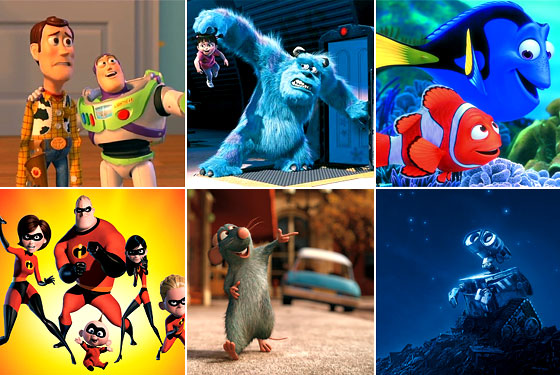
Pixar films have dominated the animation community since 1995’s ground-breaking Toy Story; the first feature length film entirely animated using computer technology. In the new millennium, Pixar has managed to maintain their world-famous quality with great success, producing one outstanding film after another, and in effect solidifying their reputation as the most innovative and reliable animation company in the world. Their recent credits include critically acclaimed and monumentally successful films Monsters Inc., Finding Nemo, The Incredibles, Wall-E, and Up. These phenomenal films have succeeded in revolutionizing the field of animation; they’ve pushed the genre into entirely new, mysterious directions, and have become as important and influential to the medium as the Disney films of the early 20th century.


Hordes of copy-cat companies soon emerged to capitalize on the incredible success of Pixar, the only notable example being the animation department at Dreamworks studios, who ripped off Pixar’s ‘A Bugs Life’ in 1998 with ‘Antz’. The only legitimately enjoyable film produced by Dreamworks may be Shrek, which proved to be the juggernaut animation series of the new millennium, despite its lackluster sequels.
Overall, this decade has experienced several extremely important innovations in the animation community, and has witnessed an incredible revival in the popularity and credibility of the genre.

Tuesday, December 1, 2009

Comic Book Movies in the New Millenium


Comic book movies have transcended their role as pure entertainment in our society; they have become, in more ways than one, a national obsession. The new millennium brought with it a plethora of industry juggernauts, which have consistently dominated the domestic box-office year after year, breaking numerous records in both revenue and attendance along the way. The Dark Knight, Spider-Man, and Iron Man are prime examples of films that have entered the public consciousness and have virtually redefined the role of the comic-book hero in our culture.


What is it about comic book movies that have made them so insanely popular in recent years? Is our post-9/11 society in need of a hero? Have we become disillusioned with perpetual lies, false hope, and empty promises? Are we unconsciously aware of our imminent destruction, of our greed and intolerance, of the bleak future that may await us in the cold, dark unknown? Is our pessimistic world in dire need of an escape, of a new hope for peace, justice, and love? Do we eagerly anticipate the resurrection of the American dream? What is certain is that on occasion, we must take a plunge down the rabbit hole; we must enter a fantasy of optimistic faith, where a simple man, like Bruce Wayne or Peter Parker, can rise up and overcome those that oppress and betray the people of the United States.

Sunday, November 29, 2009

Predator 2 (1990)


Why did everyone in the 80’s think 1997 was going to be the year of the apocalypse? In Escape From New York, it’s the year New York is turned into a maximum security prison, in Terminator, it’s the year of Judgment Day, and in Predator 2, it’s the year Los Angeles turns into a ‘warzone’ (as the movie constantly reminds us).


Yes, Predator 2 takes place in 1997 (which was the ‘future’ when the movie was made). Its vision of 1997 is a pessimistic one, with the city of Los Angeles being tormented by ridiculous looking gangs (like the ganja-smoking ‘Jamaicans’). It’s all very familiar stuff, and the movie doesn’t go through the trouble of properly introducing us to this alternate reality 1997. Instead, it goes right to the shitter.


That’s right, throughout the first hour of the movie, almost nothing happens in the way of a plot. The Predator kills random gang members and various expendable secondary characters, while Danny Glover stands around scratching his head and wonders that the hell is going on.


Ah, yes, Danny Glover plays Harrigan, a loose cannon cop who doesn’t play by the rules. He’s constantly badgered by his cardboard-cutout chief, who doesn’t appreciate his disregard for policies and overuse of excessive force. Does this sound familiar? Does this sound like every single cop movie from the 80’s? It should, because it is perhaps the most common cliché in movie history, and this time, it’s done with extraordinary laziness. I don’t mind this cliché if it’s done right. If the cop is an interesting character, like Dirty Harry or John Mclane, then it’s easy to get over the fact that you’ve seen the same formula a million times. But no, Danny Glover’s character is so sterile and uninteresting that I just couldn’t bring myself to care about him or the ‘plot’.


Speaking of the plot, it’s virtually nonexistent until, finally, in the last 40 minutes of the film, Gary Busey explains that the Predator is in Los Angeles because he’s attracted to War-Zone environments, and likes to kill people for sport. Now, he wants to capture the Predator for scientific study. After this is explained, the Predator kills more people and the movie finally ends. Let me just remind you that this movie is 104 minutes long.


I don’t understand why this movie gets so much love from Predator fans. The first Predator had an involving plot, fast-pacing, great characters, a lot of action, and an awesome hero to cheer for. Predator 2 lacks all of these qualities. It’s a humdrum film that I found to be extremely pedestrian and disappointing.


Here’s what Predator 2 is: a combination of Lethal Weapon and Predator, two of the greatest action movies of all time. It should’ve been phenominal, but lazy writing, flat characters and a lack of action ruined it. It’s a truly terrible movie, but it gets a three because Gary Busey is awesome, and the music is pretty cool too.

3/10

Saturday, November 28, 2009

Road House (1989)


This entire film is a frat-boy’s wet dream. All the men are testosterone pumping ultimate fighters with big muscles and short tempers, and all the women are blonde, big-breasted, and dull as dog shit. The plot is nonsensical and full of holes, and the film is too fast paced for its own good. It’s a film of the lowest common denominator, but it’s pretty sweet nonetheless.


Patrick Swayze, at the height of his pretty-boy glory, plays a man known by one name and one name only: Dalton. Dalton’s a bad-ass motherfucker with a reputation as the best club bouncer in the country. The movie starts with Dalton being hired by an awkward club owner from a small-town in Kansas who owns a bar that resembles a mix between Mos Eisely and a parking lot at a Motley Crue concert. Anyway, Dalton comes in and cleans the place up, turning it into something that looks like a yuppie’s utopia, with pink neon lights and turquoise carpets all around. Radical pad, man!


The second half of the film is infinitely worse than the first. While the first half is genuinely exciting, with edge-of-your-seat style action and pacing, the second half resembles more of a slow-burning action-drama, which is a total boner-killer, especially considering how awesome the first half was in comparison. In the first half, there’s a lot of tension and suspense, as Dalton enters a world that we, as viewers, think is too extreme for him to handle. Once we’re proved wrong, our interest increases, and now, it’s the films job to expand on these obstacles facing the hero, to give him new, interesting things to do in order to keep our interest intact.


Unfortunately, Road House fails to do this. After Dalton has established himself as the baddest mofo around and has rid the bar of all its scumbags, a new set of bad guys enter the picture, this time led by a rich crime boss who holds the entire city hostage in his iron fist of fear. For more than an hour, Swayze battles the same three goons over and over again, and it gets prettytedious after a while.


There’s also a boring love-interest introduced about half-way through, which is a standard part of any stupid action movie from the 80’s or 90’s. This love-interest, though, is one of the most boring and pointless characters I’ve ever had the displeasure of enduring. Her only reason for being in the film is so Dalton can bone her (which he does, of course!).


The crime boss and his goons are boring, unoriginal villains, and the best fighter looks like the lead singer from Krokus, that is, utterly ridiculous, although he does provide a great Mortal Kombat-esque death scene.


Uh oh, hope I didn’t spoil it for anyone. Whatever, if you’ve seen more than two other action movies from this era, then you already know the deal. The second half of the movie is so formulaic and uninspired that I nearly forgot about how insanely cool the first half was. The action is great throughout, yeah, but the fights are too few and far between, and the endless dialogue scenes interrupting them seem to drag on forever. What I’m trying to say is that this movie is over-long, and it loses steam about three quarters of the way through.


I have no complaints about the solid acting, but I must comment that Swayze’s mullet deserved an Oscar nod for its outstanding performance. It is a ‘do’ of unparalleled beauty and grandeur, one that brings an awesome glow of pulchritudinous flavor to every scene. It is, perhaps, the most masculine thing that mankind has ever attempted to capture on film.


I’d also like to point out that this film has a shockingly low supply of one-liners, and that the lines that it does have are utterly horrible (“I used to fuck guys like you in prison!”). Come on! At least it has the obligatory scene of a car exploding in mid-air. Awesome.

Terminator Salvation (2009)


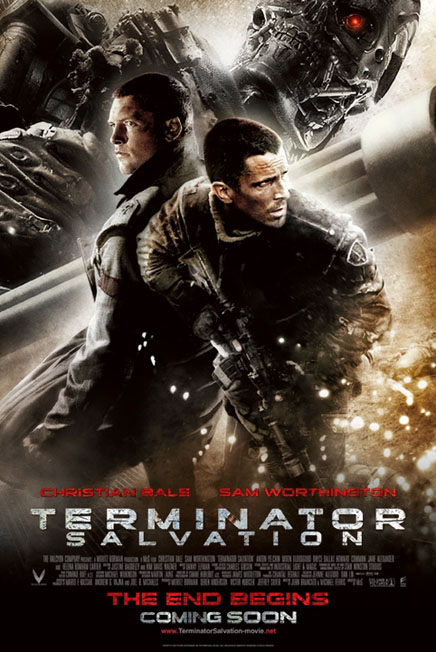
“Terminator Salvation” was an experience similar to watching a 3D movie without the glasses. It tries it’s best to make it’s action interactive and exciting to the audience, but only succeeds in coming off as a dull special-effects montage. It’s a flat, by-the-books action film, void of any originality or credibility, successful only because it bears the name of one of the greatest action franchises of all time.

The first two Terminator films (1984’s “The Terminator” and 1991’s “Terminator 2: Judgment Day”) are films that will forever be regarded as classics in the genres of action and sci-fi. They combine their thrilling scenes of action with well-developed characters, clear and innovative plots, and the perfect amount of comic relief. The third Terminator film, released in 2003, was a rehash of Terminator 2 that failed to win the hearts of the fans, but is still considered to be a decent action film.

Now, in Terminator: Salvation, we’re shown the aftermath of an apocalyptic future of mankind, where the humans are fighting an un-winnable war against deadly machines controlled by a super-computer called Skynet. John Connor (Bale), the future leader of the human resistance, hasn’t quite reached his full potential by the beginning of Salvation; he’s still trying to figure out if the future’s inevitable, or if it can be changed for the better. Geez, you'd think he'd have figured it by now!

The film takes a further nosedive with the addition of a new Terminator, who in this movie is actually the first Terminator ever made. This particular Terminator has a unique twist; for some bizarre and unexplainable reason, he still thinks he’s a human. Sounds exciting right? Well, it had the potential to be, but unfortunately the film goes nowhere with it. Instead, they decide to ham fist an utterly ridiculous fan service into the plot by having the new Terminator meet up with Kyle Reese.

For those who are unaware (believe me, I get confused myself), Kyle Reese was the hero of the first movie who happens to be John Connor's father, making him a major target during Salvation's time. Reese is completely oblivious to his importance to the resistance and manages to get himself involved with Terminators yet again. Who does this guy think he is, John Mclaine?

A coincidence of this nature is the mark of a lazy writer, and the writers of Terminator Salvation were clearly lazy about their work. Almost every piece of information given in this film contradicts with information given in any of the previous films. One could spend hours trying to figure out what Skynet knows, what it doesn’t know, or what the characters know. They could even, god forbid, try and figure out what the hell is going on, but no matter how hard they think, they’ll come to the same conclusion every time: none of it makes any sense.

The Terminator series was never meant to be continued after Terminator 2, it wrapped the plot up nice and tight, but the introduction of T3 turned the whole universe upside down, and now, everything about the film is so complex and confusing that it’s not even worth trying to figure out. 

The writers obviously want us to ignore the various plot holes, to ignore the silly and unrealistic motivations of the characters, and to ignore the terrible dialogue. Instead, they beg us to turn our brains into mush, while the fancy images on the screen keep us constantly entertained.

Terminator Salvation is a film so radically different from the first three that it shouldn’t even be considered a part of the series. While the first two films revolutionized the action genre with the depth of their characters and plot, Salvation is a film that favors style over substance to a degree usually reserved for the likes of Michael Bay. It’s so unrecognizable and detached from the original films that it resorts to a plethora of fan services, in a sad attempt to prove it’s an actual sequel (I was surprised [and relieved] that nobody said “Hasta la vista, baby!”).

This unjustifiable train wreck has resulted in a mindless special effects exhibit, featuring boring action and even more boring characters, who, although they try and convince us there’s an actual story hidden somewhere, ultimately fail in doing anything at all.

This movie is responsible for over two hours that I’ve wasted from my life, time I could’ve spent on far more productive and fulfilling activities, like falling asleep for instance. I could rant like a nerd for hours about the movie, but then again, it’s not worth wasting any more time on, so I’ll conclude by pointing out that the director’s name (McG) sounds like something on the dollar menu at McDonalds. Something you would probably find hair in.

Son In Law (1993)


Son in Law is not Citizen Kane. It is not Seven Samurai. It’s not even Tokyo Story! It’s a silly, ridiculous comedy with wacky, exaggerated characters and several inane melodramatic moments to balance it all out. For what Son in Law is, it works.


Carla Guigino stars as Rebecca Warner, an innocent, naïve country girl who’s leaving her farm to go to college in the big city of L.A. Once there, she meets Pauly Shore’s ‘character’, Crawl (which is an awesome name, by the way). Crawl shows Rebecca what it means to be a college student in L.A by changing her into a complete whore. Rebecca becomes good friends with Crawl, and brings him home to her family for thanksgiving.


Unfortunately, the family doesn’t appreciate Crawl’s wild antics, especially Rebecca’s little brother, Zack (played by the fat ginger kid from The Sandlot). Things get worse when Rebecca’s old boyfriend proposes to her. Rebecca doesn’t want to marry him, so Crawl announces that Rebecca can’t get married to her old boyfriend because she’s already engaged to HIM. The rest of the film concerns Crawl trying to gain acceptance from Rebecca’s traditional parents, while all the while trying to avoid the revengeful behavior of her ex-boyfriend.


The plot is pretty engaging, and it keeps the viewer entertained the whole way through. Pauly Shore is his usual retarded self, but he’s unusually funny in this one (this was before the horrible ‘Bio-Dome’). He is at his least annoying in Son in Law, and the movie actually allows the audience to care about him, instead of wanting to strangle his dumbass.


This is probably Pauly Shore’s best movie (not counting the awesome ‘A Goofy Movie’). Even if you hate him, give Son In Law a chance, because he can be pretty funny in it at times. For example, Rebecca’s ex-boyfriend gets mad at Crawl and punches him in the face. Crawl falls onto the floor and cries. It’s not comedy gold, but it’s pretty funny and entertaining pulp, plus it’s nostalgic as hell.


7/10